
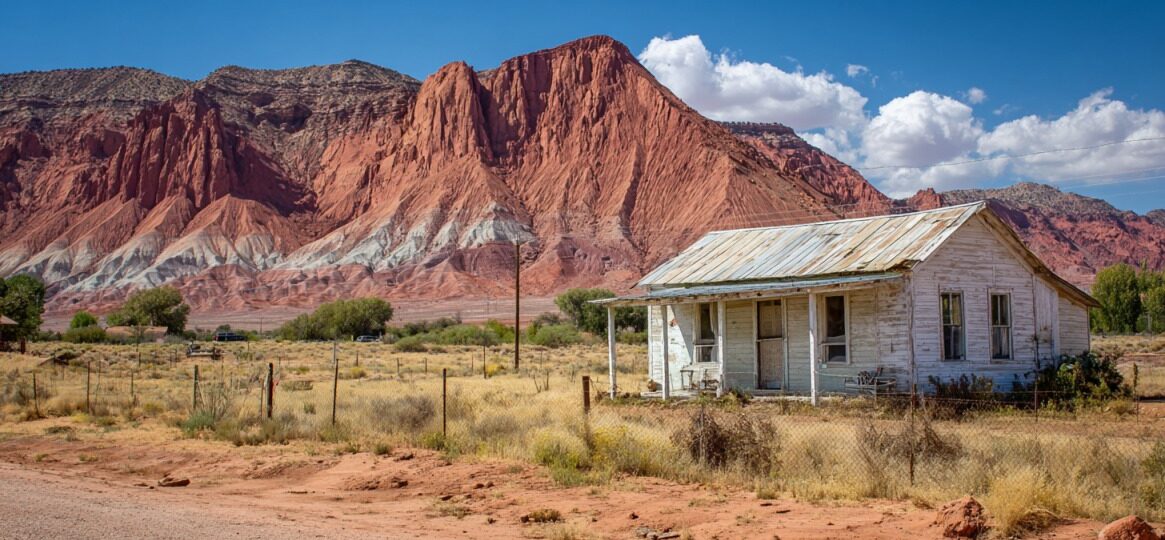

Utah’s famous parks like Zion draw massive crowds year after year, often turning peaceful desert scenes into busy corridors packed with tour buses and long lines. A few hours away sits a tiny desert town where scenery feels less like Earth and more like a distant planet.
Hanksville, Utah delivers an otherworldly desert scene so striking that scientists and space researchers use nearby terrain to simulate Mars conditions, all without heavy tourism. Sparse population, open horizons, and dramatic color shifts define daily life around town.
Hanksville sits in south central Utah, acting as a gateway to red and gray desert features near Capitol Reef and the San Rafael Swell. Isolation plays a major role in shaping both the atmosphere and the experience, with long stretches of road separating visitors and silence filling the gaps.
Why Hanksville Feels Like Mars
View this post on Instagram
Terrain around Hanksville mirrors Martian imagery through texture, color, and scale rather than dramatic elevation or vegetation. Ground surfaces display layered red rock, dry river channels, fractured earth, and clay hills that echo photos sent back by Mars rovers.
Ancient sedimentary deposits such as siltstone and sandstone settled over millions of years, later exposed by erosion and wind, leaving surfaces that feel stark and unfamiliar.
- Extensive cracked soil patterns similar to desiccated Martian ground
- Long dry washes that resemble ancient river channels
- Minimal plant life across broad desert plains
- Color bands shifting between red, gray, tan, and muted green
Light plays a major role in shaping perception. Sun angle changes quickly across open desert, altering color tones within minutes. Morning light sharpens reds and grays, while evening light softens edges and deepens shadows.
Sparse vegetation removes visual reference points, making distances harder to judge and enhancing a sense of standing on unfamiliar ground.
Mars Desert Research Station (MDRS)
A short drive outside town sits the Mars Desert Research Station, a Mars analog research facility operated by the Mars Society. Scientists and engineers use MDRS to simulate living and working conditions expected during future Mars missions.
Daily routines, equipment testing, and isolation protocols all mirror challenges astronauts may face on another planet.
- Two story habitat used for crew living quarters
- Greenhouse designed to test food growth in controlled conditions
- Science dome for geology and biology experiments
- Observatory for night sky observation and data collection
Public entry remains restricted to protect research integrity. Travelers can still reach Cow Dung Road and view the exterior, reinforcing how seamlessly the station fits into the surrounding desert ground.
Rover prototypes and robotics teams, including groups participating in the University Rover Challenge, regularly test equipment nearby.
Regional terrain provides visuals and surface conditions close enough to Mars to support serious scientific work.
Best Mars Like Spots Around Hanksville
Several sites around Hanksville push the Mars on Earth illusion even further, each offering a different surface texture, color palette, and sense of isolation.
Distance between locations stays short, yet visual character shifts dramatically, rewarding slow travel and careful timing.
Bentonite Hills
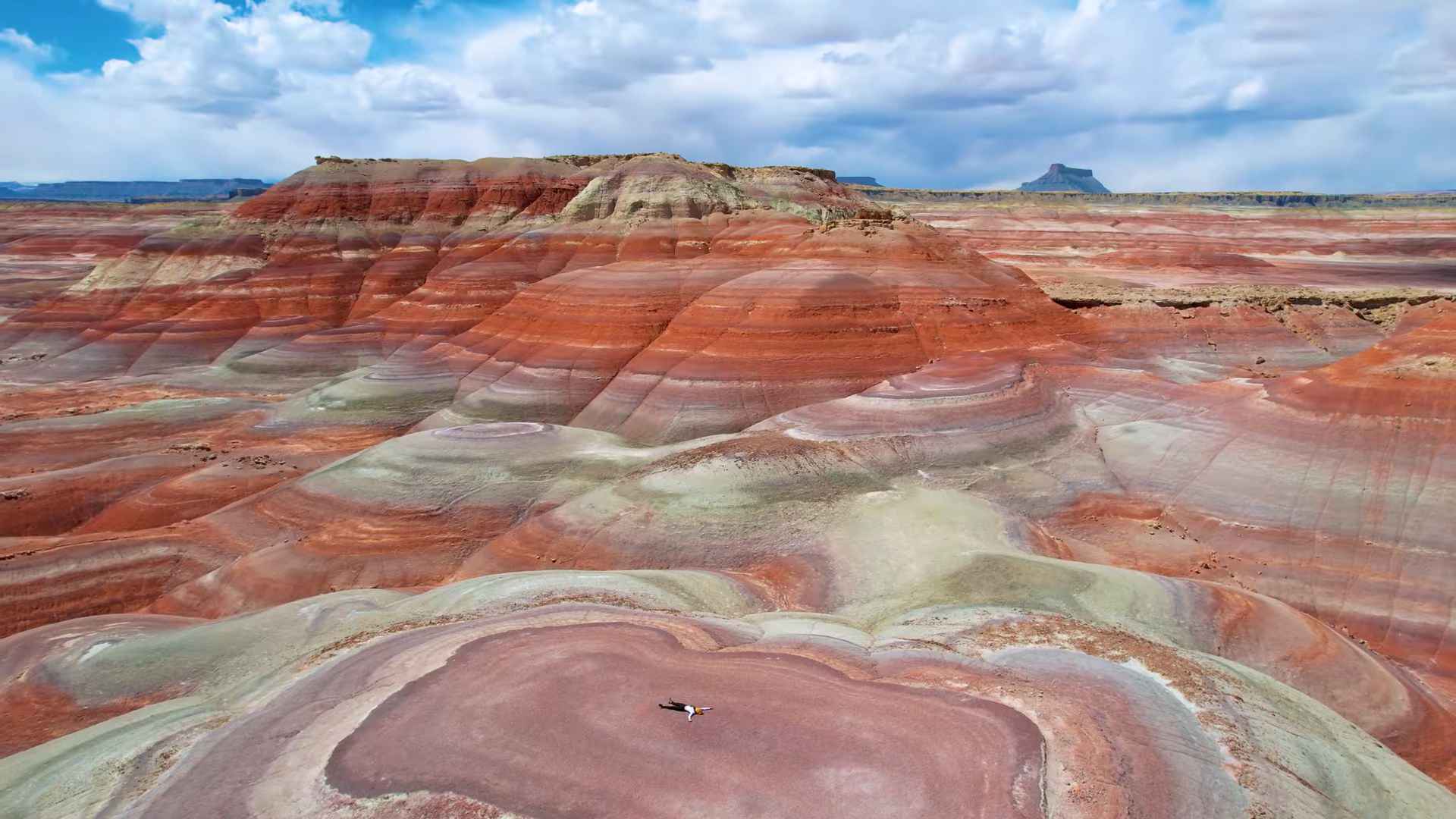
Bentonite Hills sit near Hanksville and along routes leading toward MDRS, presenting rolling clay formations layered with intense color bands.
Jurassic era sediments shaped these hills over time, producing soft slopes painted in reds, browns, purples, grays, and muted greens that curve and fold across the desert floor.
- Dry weather keeps clay firm and walkable
- Rain turns surfaces slick and difficult to cross
- Low sun angles intensify color separation
- Open terrain leaves little shade or wind protection
Photography works best during golden hour or blue hour as shadows stretch and contrast sharpens across the hills. Foot travel requires caution since clay can crumble under pressure and surface texture changes quickly across short distances.
Moonscape Overlook
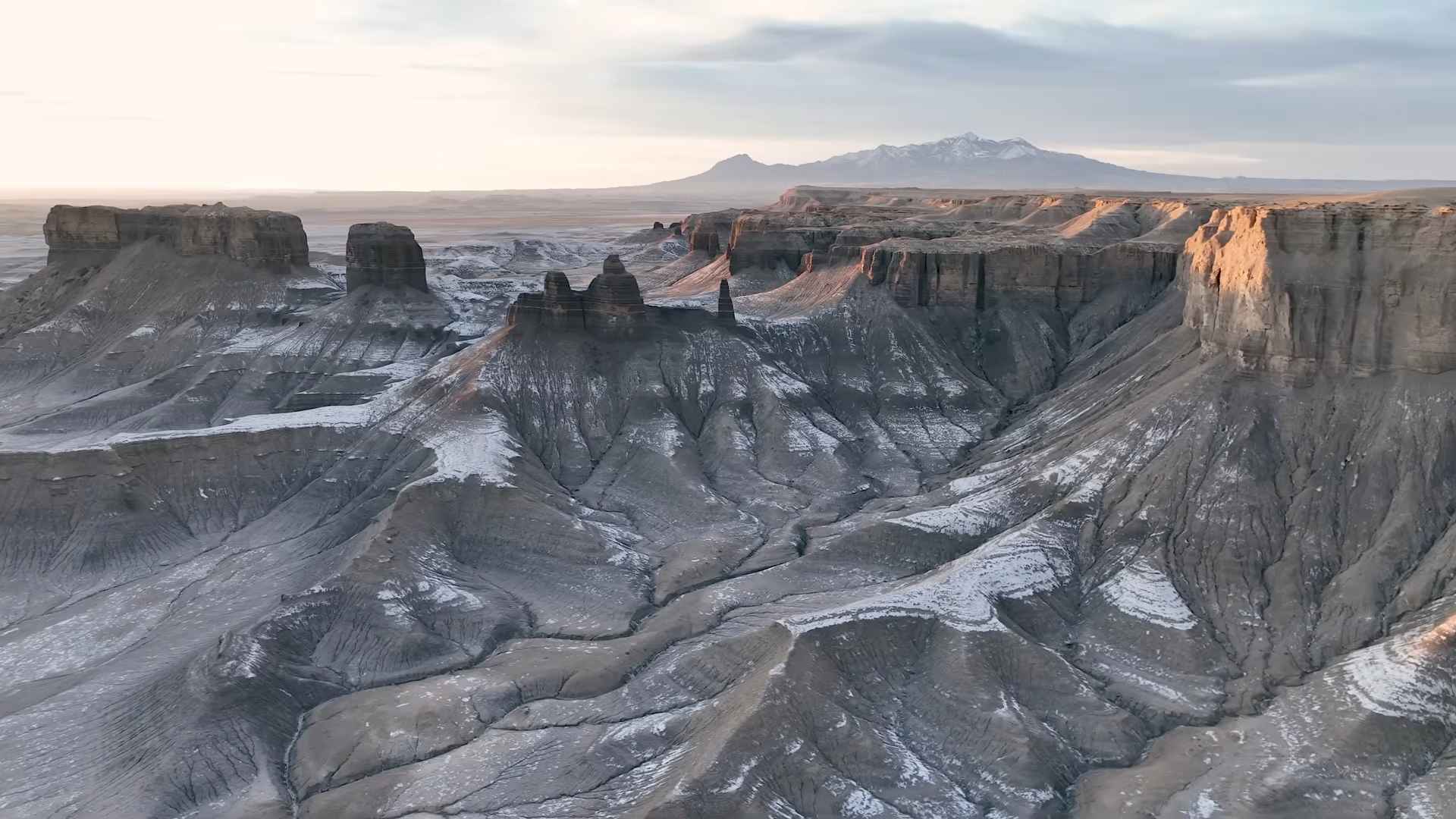
Moonscape Overlook introduces a colder, more barren visual tone compared to nearby clay hills.
Gray cracked mesas and eroded badlands stretch outward with almost no vegetation, creating an atmosphere that feels stripped down and distant.
- No railings, signs, or restrooms
- Rough dirt roads leading inward
- Changing road conditions after storms
Weather and light transform the area rapidly. Overcast skies flatten textures, while angled sunlight reveals deep fissures and layered erosion patterns. Silence dominates the area, interrupted only by the wind moving across open ground.
Factory Butte and Blue Valley
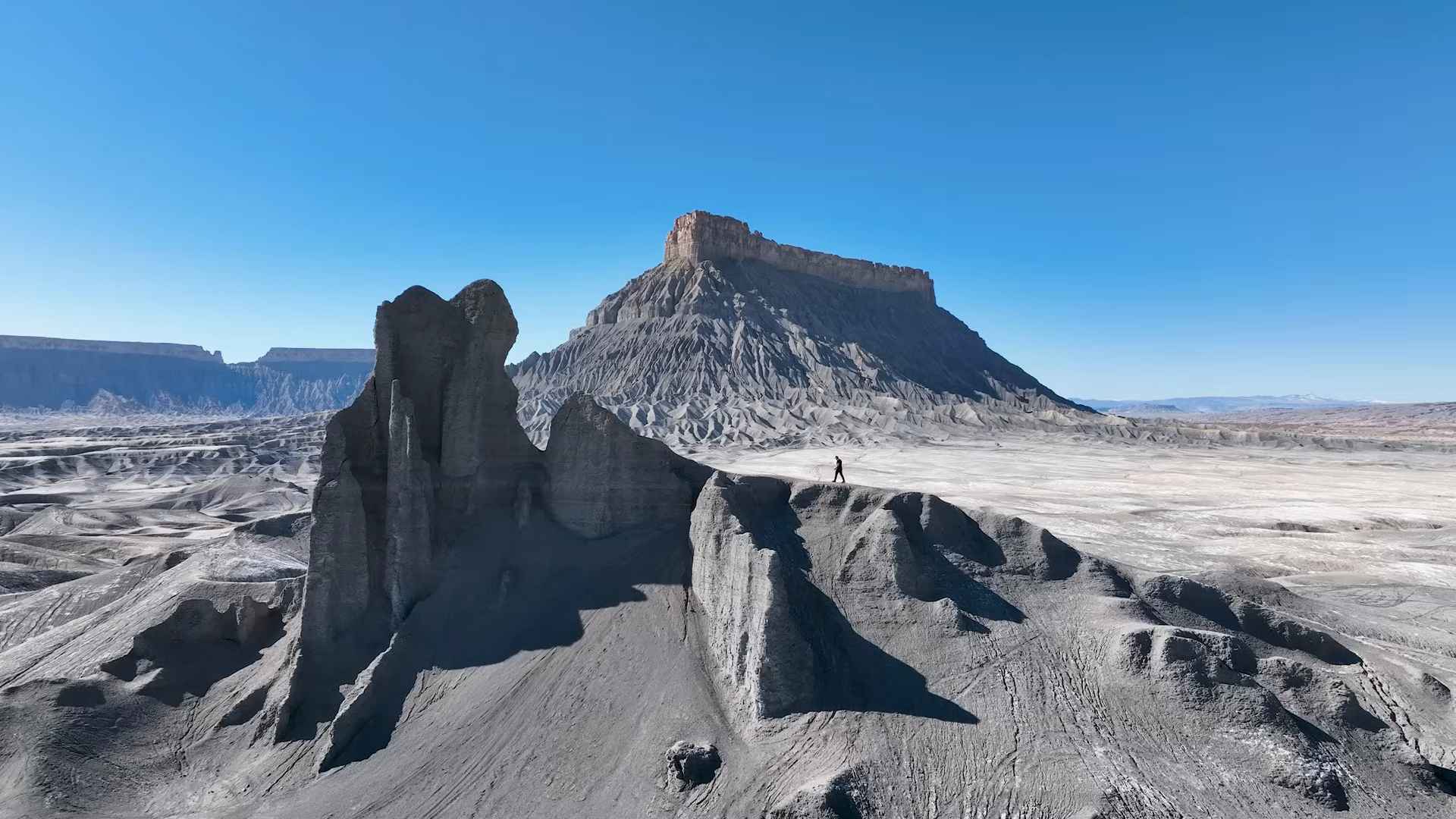
Factory Butte rises as a flat-topped formation dominating nearby plains, acting as a visual anchor across miles of desert. Sharp edges and steep sides contrast strongly with the surrounding ground, drawing attention even at a great distance.
Research teams and photographers value the area due to its isolation and unusual geological structure.
Blue Valley and the surrounding badlands extend outward with cracked soil, jagged ridges, and wide open views. Light changes bring constant shifts in tone and depth, especially during sunrise and sunset when shadows stretch across valley floors and surface detail becomes more pronounced.
What Hanksville Offers Outside Planet-Like Views
Life around Hanksville revolves around space, silence, and self-reliance. Small population size and long distances shape a slower rhythm that contrasts sharply with crowded national park corridors.
Peaceful, Low Traffic Experience
Daily routines unfold without congestion or constant noise. Roads remain quiet, pullouts stay open, and campsites spread far apart. Visitors often find themselves alone even during peak travel seasons, allowing time to pause, observe, and move without schedule pressure.
Outdoor Activities
Hanksville functions as a practical base for outdoor pursuits across nearby BLM land marked by dramatic desert features.
- Hiking across open desert and badlands
- Photography centered on texture, shadow, and scale
- Off roading along remote dirt routes
- Dispersed camping far from developed areas
Dinosaur quarries nearby introduce a prehistoric dimension, linking ancient life to modern desert exposure and erosion.
View this post on Instagram
Hidden Gems Nearby
Surrounding areas add depth to a stay in Hanksville by connecting desert scenery with deep time and varied terrain.
Short drives unlock places tied to paleontology, geology, and wide open space, often without the congestion associated with more famous destinations.
Hanksville Burpee Quarry provides rare access to an active dinosaur fossil excavation site. Visitors can view exposed bones embedded in rock and learn how scientists carefully uncover, document, and preserve prehistoric remains.
Educational displays explain excavation methods, fossil identification, and why nearby desert conditions continue to reveal new discoveries. Ongoing research gives the site a living, working atmosphere rather than a static exhibit.
- Capitol Reef offers scenic drives, orchards, and canyon hikes with far fewer visitors compared to larger Utah parks
- Canyonlands delivers immense desert views, mesas, and river-carved canyons spread across vast districts
- Goblin Valley features unusual rock formations and open terrain where visitors can roam freely
Proximity to these locations allows travelers to combine solitude with variety, shifting between quiet desert stretches and well-known geological features without dealing with heavy entrance traffic or crowded viewpoints.
Best Time to Visit
View this post on Instagram
Seasonal timing affects comfort, access, and visual conditions across the region. Spring months such as March through May deliver mild temperatures, strong lighting, and ideal conditions for hiking and photography.
Fall periods, including September through November, provide similar benefits with fewer visitors.
- Early morning travel is recommended
- Midday exposure limited
- Monsoon storms possible
- Flash flood risk near slot canyons
Winter introduces cold nights and quiet desert views. Prepared travelers gain solitude, clear skies, and dramatic light, especially after light snowfall dusts the surrounding terrain.
Summary
Crowd fatigue pushes many travelers to seek quieter destinations that still deliver visual impact. Hanksville answers that call with terrain so alien that space researchers treat it as a Mars stand-in.
Camera gear, reliable navigation, and a willingness to leave busy parks behind open access to one of the most surreal desert experiences in the United States.
Space exploration history and raw desert solitude meet in Hanksville, Utah, waiting well off the usual tourist path.