
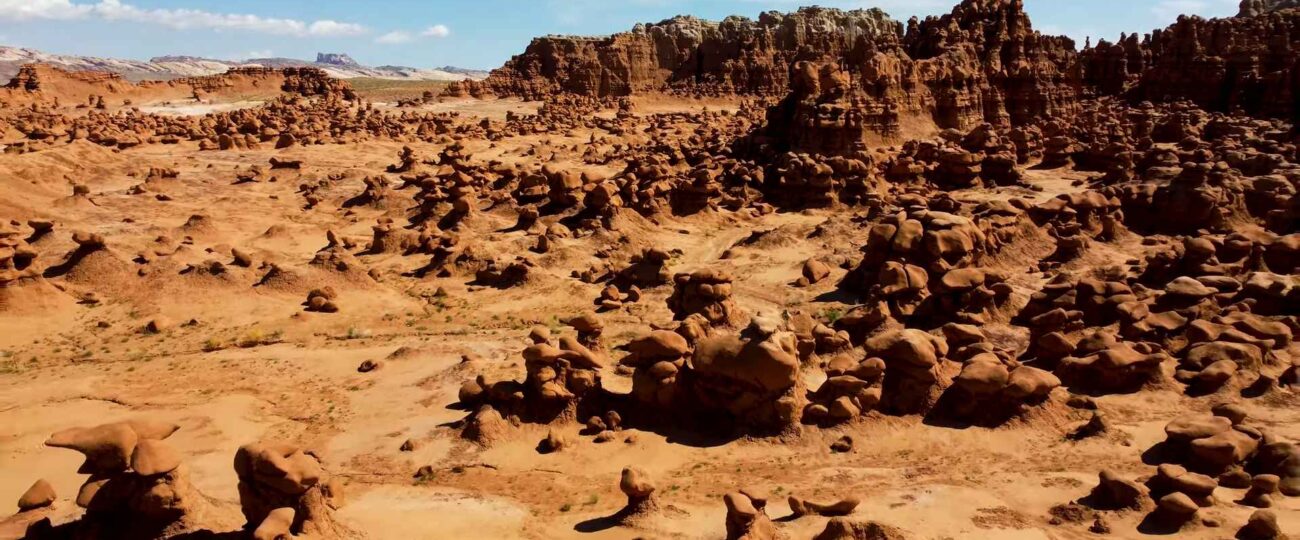

Goblin Valley State Park is known for a surreal desert setting filled with thousands of bizarre rock formations that many travelers describe as feeling like another planet. Strange sandstone figures rise across a broad basin, forming shapes that look sculpted by imagination rather than nature.
Visitors often compare the scene to science fiction worlds, with clusters of squat, mushroom-like rocks stretching as far as the eye can see.
Other areas in Utah offer dramatic views, yet few create the same sense of stepping onto unfamiliar ground.
Countless hoodoos crowd the valley floor, forming an open expanse that invites curiosity at every turn. Bright red and orange tones intensify the effect, especially when sunlight shifts across the basin.
Let us talk about this place in greater detail.
Where Is Goblin Valley?
Goblin Valley State Park occupies a remote stretch of eastern Utah that feels far removed from crowded scenic destinations. Vast desert terrain surrounds the park, creating a sense of openness that begins long before arrival at the entrance station.
Goblin Valley State Park sits in Emery County along the southern edge of the San Rafael Desert. Access comes primarily via State Route 24, followed by a short drive north of Hanksville.
- Approximately 15 minutes north of Hanksville
- Situated in Emery County, eastern Utah
- Positioned along the southern boundary of the San Rafael Desert
- Reached by a paved road branching off State Route 24
Sparse development surrounds the area, so gas stations, grocery stores, and full-service amenities remain limited.
Long stretches of highway pass through open desert with few structures in sight. Wide horizons stretch uninterrupted in nearly every direction, reinforcing the sense of isolation.
Remote placement in the American Southwest contributes to its vast, open character. Minimal nearby towns and low traffic levels create extended periods of quiet.
Silence, wind, and distant mesas combine to produce impressions that feel far removed from daily routines.
What Makes It Look “Alien”?
First-time visitors often pause in disbelief after cresting the final hill into the main basin. Unusual rock shapes dominate the view, arranged in dense clusters across the desert floor.
Visual impact comes not just from individual formations, but also from the sheer number spread across thousands of acres.
The Goblins (Hoodoos)
View this post on Instagram
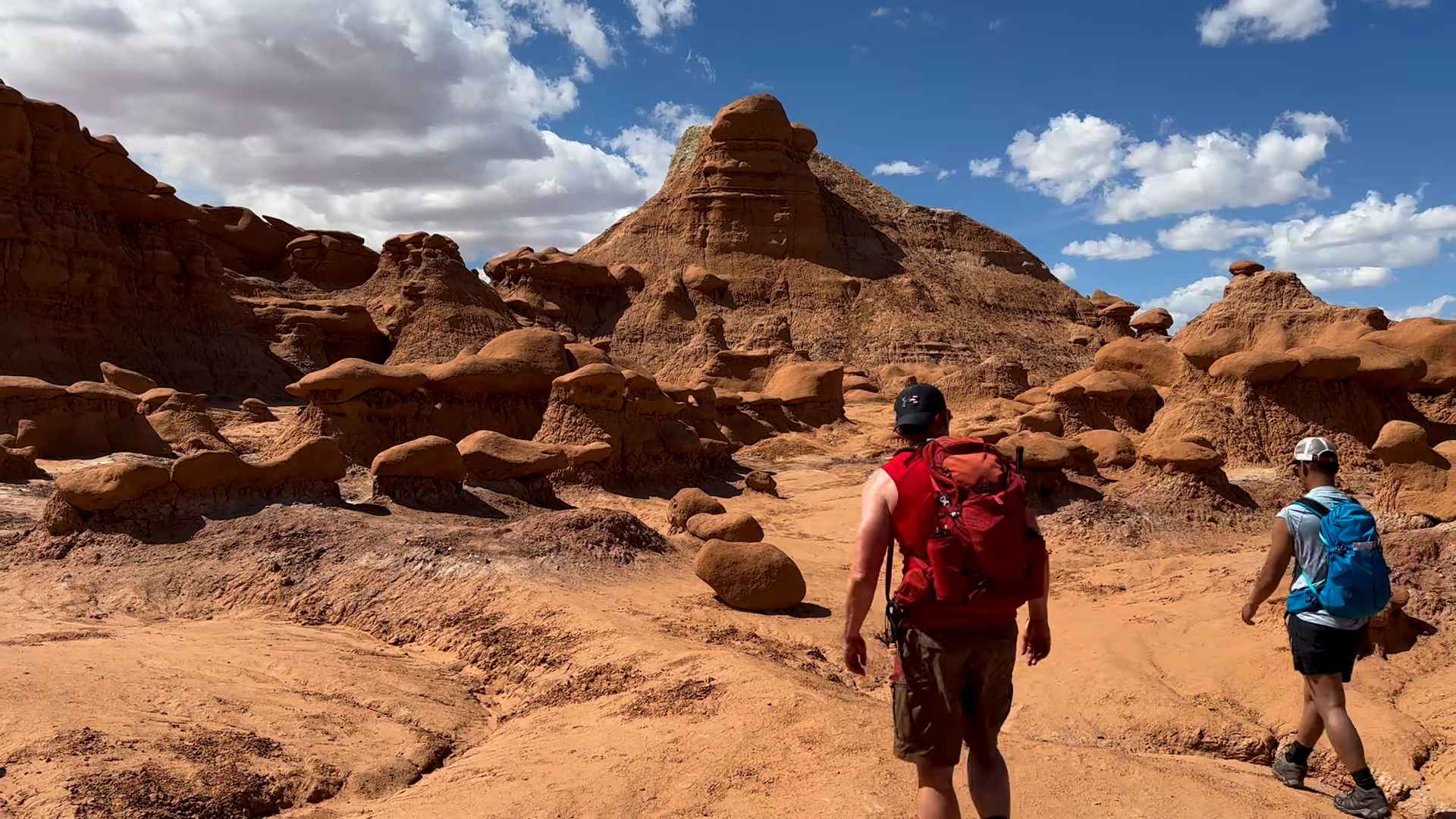
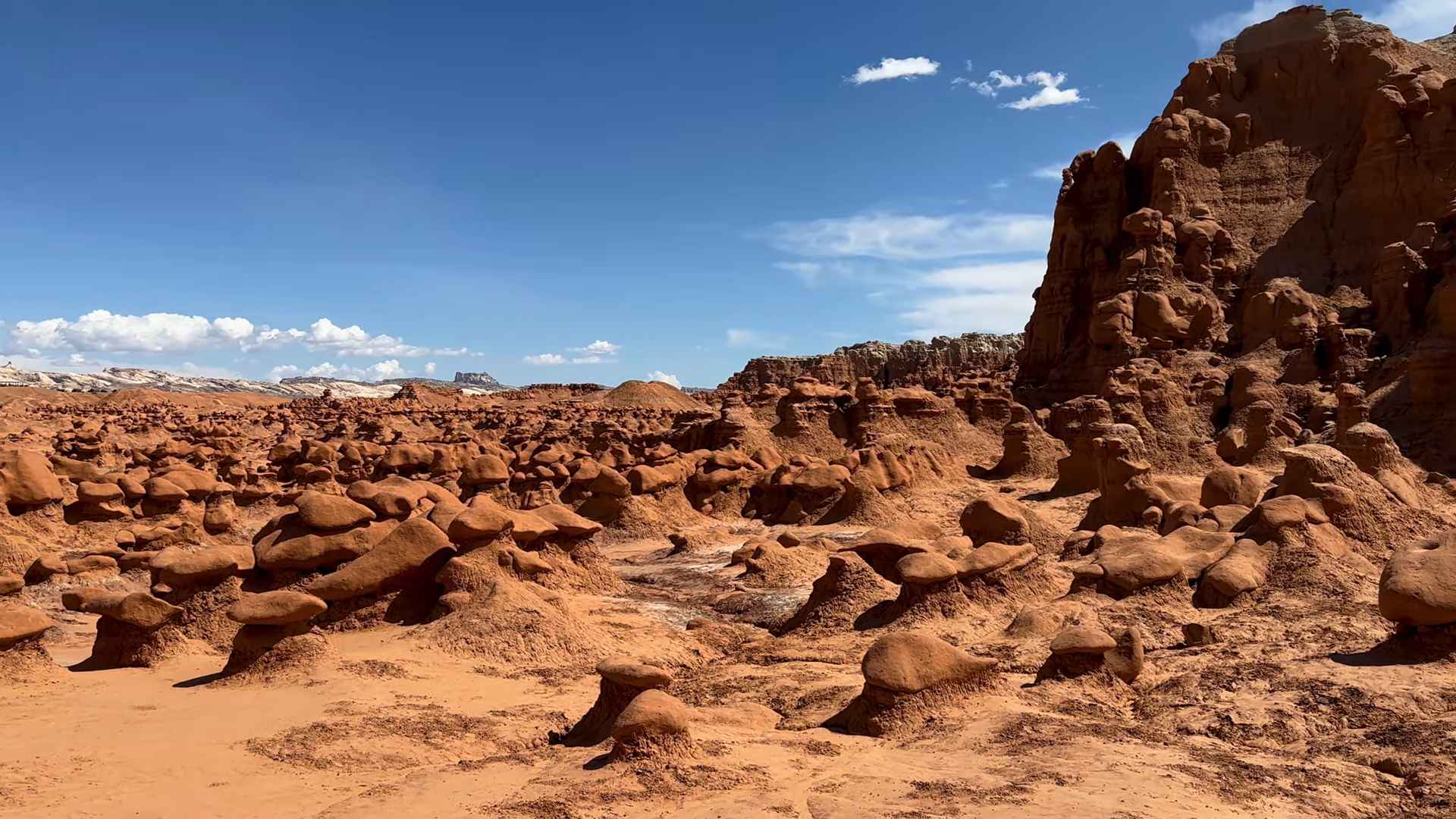
Thousands of mushroom-shaped sandstone hoodoos, known locally as goblins, define the park’s identity. Roughly 3,500 acres are covered with these formations, forming a maze of irregular silhouettes and stacked shapes.
Variations in size and proportion create an almost sculptural effect across the basin.
- Rounded caps that resemble oversized mushrooms
- Narrow necks supporting heavier upper sections
- Bulbous bases shaped by uneven erosion
- Clusters are grouped tightly together in certain sections
Some goblins appear squat and wide, while others rise taller with slender midsections. Irregular outlines and playful forms encourage comparison to imagined planets. Walking among them can feel like moving through rows of stone figures frozen mid-motion.
Density and arrangement of formations create scenes rarely matched in other desert settings.
Geological Origins
Ancient processes shaped every hoodoo visible today. Rock layers began forming around 170 million years ago during the Jurassic Period, when tidal flats covered the region.
Sediment settled in layers, gradually compacting and hardening into sandstone over millions of years.
Natural forces then began carving the shapes that now define the valley.
- Wind abrasion that strips away softer material
- Rainwater that seeps into cracks and widens them
- Ice expansion during freezing temperatures that fractures rock
Softer sections eroded more quickly, leaving harder caps perched on narrower pedestals. Erosion continues in the present day.
Fallen fragments scattered across the basin mark earlier hoodoos that collapsed after centuries of weathering. Change remains constant, even if it unfolds slowly on a human timescale.
Distinctive Features of the Area
Valley of the Goblins spans several square miles and contains no designated trails within the main basin.
Visitors can move freely among formations, selecting their own routes through winding corridors of stone. Absence of marked paths enhances the sense of unstructured discovery.
Few trees interrupt the view, and human structures remain minimal. Visual simplicity strengthens the dramatic effect of clustered sandstone figures rising across open ground.
Light plays a major role in shaping daily impressions.
- Early morning produces long shadows that stretch across the valley floor
- Midday sun flattens shapes and intensifies red and orange tones
- Late afternoon light deepens earth colors and creates sharp contrast
Changing angles of sunlight transform familiar clusters into entirely new compositions. Subtle variations in shade and brightness make each visit feel slightly different, even within the same day.
How Was This Place Discovered?
Human presence in the region likely dates back centuries, long before written records documented visits. Indigenous peoples traveled across desert routes for trade, hunting, and seasonal movement.
Modern recognition began in the 1920s when prospector Arthur Chaffin noticed unusual rock shapes in the distance. He initially named the area Mushroom Valley after observing the rounded caps rising above the desert floor.
Later, explorer Philip Tompkins proposed the name Goblin Valley, believing the term goblins would spark curiosity and public interest.
Protective measures followed as awareness grew.
- 1954 designation as a state preserve to prevent vandalism and damage
- 1964 recognition as a State Park, granting stronger oversight and protection
Preservation efforts aim to safeguard fragile sandstone formations that can be easily damaged by careless climbing or rock removal.
@joshopediaGoblin Valley State Park (A brief history)♬ original sound – Josh
Does It Feel Planet-Like?
Impressions of stepping into another world often begin within minutes of entering the basin. Open wandering, unusual rock shapes, and silence combine to create an atmosphere unlike most recreational areas.
Lack of formal trails in the Valley of the Goblins allows visitors to move in any direction among the hoodoos. Freedom of movement enhances the sensation of discovery.
Several well-known spots draw consistent attention. Three Sisters, a trio of taller goblins near the parking area, ranks among the most photographed formations. Goblin’s Lair offers a more demanding 2.3-mile out-and-back route that requires scrambling and a permit.
Physical exertion and uneven terrain strengthen the sense of adventure.
Recreation extends into additional activities within the park.
- More than 7 miles of mountain biking loops in the Wild Horse Mountain trail system
- Disc golf course set against dramatic sandstone formations
- Stargazing opportunities supported by the International Dark Sky Park designation
Minimal light pollution allows dense star fields and clear views of the Milky Way. Night photography frequently captures glowing skies above darkened rock shapes.
Families often treat the basin as a natural playground, moving carefully among sturdy formations. Imagination turns clusters of goblins into castles, creatures, or distant planets. Caution remains important, since fragile sections can break under pressure.
Photographers seek out sunrise and sunset for optimal lighting conditions. Warm tones intensify during early and late hours, casting elongated shadows across the basin. Shifting light ensures fresh compositions at different times of day.
So, Is It Like Another Planet?
Goblin Valley combines strange geological formations, open wandering, and dramatic desert scenery in a way that makes many visitors feel far removed from typical surroundings.
Dense clusters of hoodoos spread across a wide basin, creating scenes often compared to Mars.
Comparison to another planet remains imaginative, yet the emotional reaction is real.
Stark red rock, isolation, and freedom to move among countless goblins create an experience that feels strikingly unfamiliar while still firmly rooted on Earth.