
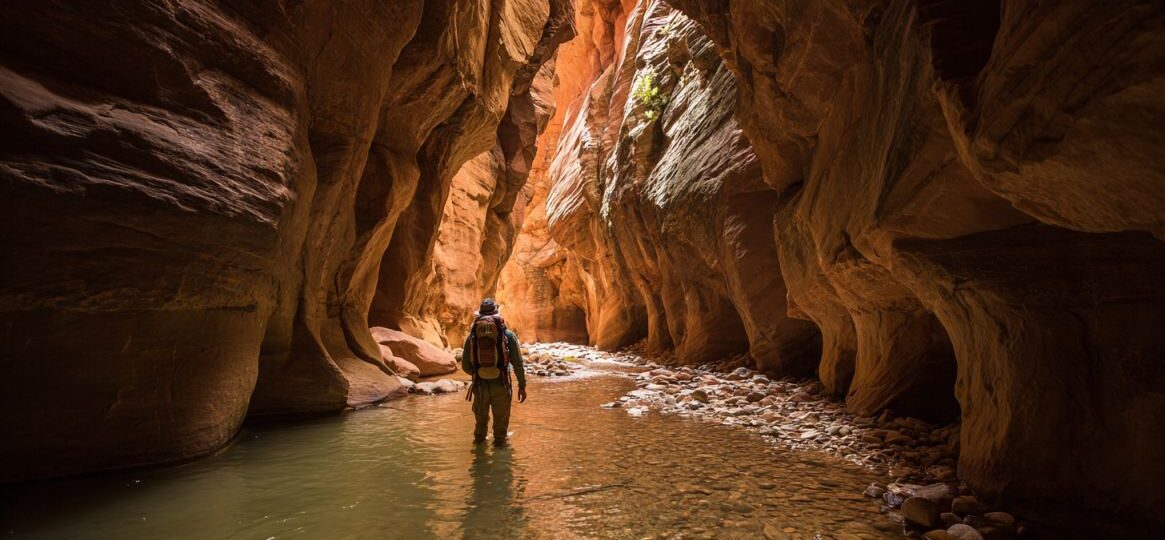

Slot canyons and remote backcountry areas in the American Southwest draw hikers, climbers, and canyoneers seeking narrow passages, sculpted rock walls, and remote terrain. Utah and Arizona contain some of the most sought-after routes, especially in Zion National Park and Grand Canyon National Park.
Controlled entry helps reduce erosion, protect vegetation, and prevent overcrowding in confined canyon corridors.
Safety remains another major factor. Slot canyons present hazards such as flash floods, difficult navigation, and technical descents that require ropes and specialized gear.
Permit systems allow park staff to track visitor plans, which improves emergency response coordination when incidents occur.
Why Permits Are Required
Permit systems form the foundation of access control in desert backcountry areas across Utah and Arizona. Agencies use these systems to balance recreation with preservation, while also maintaining safety in environments that can shift quickly due to weather and terrain conditions.
Desert ecosystems are highly sensitive and slow to recover after disturbance. Even light foot traffic can damage biological soil crusts, which play a critical role in preventing erosion and supporting plant life.
Sandstone formations, shaped over millions of years, can also be degraded by repeated contact and improper use.
| Concern | Why It Matters |
|---|---|
| Biological soil crust | Can take decades to recover once disturbed |
| Sparse vegetation | Easily damaged and difficult to regrow in harsh environments |
| Erosion | Increases quickly when trails are unmanaged or visitors leave designated paths |
| Narrow canyon walls | Can wear down over time due to repeated friction from ropes and gear |
Visitor safety remains another major factor. Slot canyons present conditions that can change in minutes. Weather patterns in the Southwest create risks that are not always visible at the canyon entrance.
- Flash floods triggered by storms miles away
- Sudden temperature shifts can affect hydration and endurance
- Technical descents requiring rope systems and anchor knowledge
- Navigation challenges in narrow corridors with limited visibility
Utah Permit Systems
Utah contains a wide range of public lands with varying permit requirements. Zion National Park operates one of the most structured systems due to high visitation and the technical nature of many routes.
Nearby areas such as Grand Staircase-Escalante and the San Rafael Swell use a mix of permit and self-registration systems depending on location and activity.
Zion National Park requires permits for multiple types of recreation. Technical canyoneering routes, overnight camping, and certain high-demand hikes all fall under permit requirements. Strict regulation helps manage visitor flow and protect sensitive canyon environments.
- All technical canyoneering routes involving ropes or specialized gear
- Overnight backcountry camping in designated wilderness zones
- High-demand hikes, such as Angels Landing, through a lottery system
Wilderness permits are mandatory for both technical descents and overnight trips. Rangers use these permits to track usage patterns and ensure compliance with group size limits.
Types of Permits in Zion
Different activities require different permit categories. Each category is designed to address specific risks and management needs.
Day-use permits apply to select hikes with heavy visitation. Angels Landing operates under a lottery system due to safety concerns on narrow ridge sections and sustained high demand.
Canyoneering permits apply to all technical slot canyon routes. Each permit is issued for a specific route and group, with strict limits on daily entries. Information tied to each permit includes route name, entry date, and group size.
Backcountry permits apply to overnight stays. Campers must follow assigned zones or campsites depending on the area. Restrictions help prevent overuse of fragile zones and maintain spacing between groups.
Reservation System
Zion manages permits through Recreation.gov, which centralizes applications and availability. Access to permits is divided into two main pathways.
Advance reservations provide the primary method for securing permits. Visitors select dates, routes, and group sizes ahead of time, with availability limited by daily quotas.
Last-minute and walk-in permits exist in limited numbers. These options provide opportunities for flexible travelers but often require early arrival and persistence.
High-demand hikes use a lottery system. Angels Landing requires applicants to submit entries during designated windows. Successful applicants receive permits tied to specific dates.
- Daily quotas limit the number of groups entering each canyon
- Group size caps reduce congestion and environmental impact
- Time-specific entry allocations help spread use throughout the day
View this post on Instagram
Popular Permit Areas in Utah
Zion National Park contains several routes with strict permit requirements due to demand and environmental sensitivity.
- The Narrows top-down route, which requires a permit for full canyon travel
- The Subway, which uses a lottery system due to limited capacity
- Multiple technical slot canyons that require route-specific canyoneering permits
Nearby regions operate under different rules depending on the managing agency. Grand Staircase-Escalante includes areas that require permits alongside zones with self-registration systems. Moab and the San Rafael Swell offer a mix of regulated and open-access areas, though guidelines still apply to minimize impact.
Arizona Permit Systems
Grand Canyon National Park uses a structured backcountry permit system designed to manage overnight use across a vast and complex terrain. High visitation levels and limited camping space require careful allocation of permits.
Overnight camping below the rim always requires a permit. Corridor trails such as Bright Angel, South Kaibab, and North Kaibab are included in this requirement when used for multi-day trips.
Day hikes do not require permits, even for long-distance attempts such as rim-to-rim in a single day. Overnight travel triggers permit requirements regardless of route difficulty.
Park management divides the canyon into nearly 100 backcountry zones. This zoning system spreads visitors across the canyon and reduces pressure on heavily used areas.
@em.and.nick Everything you need to know about getting permits for and hiking Coyote Buttes AKA “the wave”👇 make sure you save this for youre upcoming trip to Arizona! This is one of the most difficult permits to get in the US, the chances of winning the daily lottery is less than 3% during peak season. But trust us, it is totally worth the headache of going through the permit system, so here’s the goods: Permit system- you can only enter the daily lottery within a certain geofence (you have to apply from your phone with the location turned on) and you apply 2 days prior to your desired hiking date, so keep that in mind when planning your trip! If you’re camping, Lone Rock Beach is a great spot to camp up while you wait. Timeline- you apply 2 days prior to your hike, get notified by 7 PM that night, and if you won you are required to go to a safety briefing in either Page or Kanab to get your physical permit the next morning The hike- the hike itself is not super technical, there is deep sand and there arent many trail markers so definitely save it on All Trails ahead of time. Best time to go- start the hike EARLY to avoid the heat and the crowds, I would say atleast by 5-6AM. Bring way more water than you think you’ll need, there’s no shade and it gets HOT. This was SUCH a cool hike, totally worth waiting around to get a permit. Goodluck guys and let us know if you end up getting permits! 🤠 #thewave #pageaz #hikingtips #hikingadventures #arizona #traveltips ♬ Walking Around – Instrumental Version – Eldar Kedem
Permit Application Process
Grand Canyon permits are issued through Recreation.gov, using a combination of lottery and general availability systems. Timing plays a critical role in securing permits.
- Early-access lottery, opening about four months in advance
- General availability, opening about three months before trip dates
Early-access lottery provides the best chance for securing high-demand routes and campsites. Application windows typically run mid-month through the start of the next month.
General availability releases remaining permits not assigned during the lottery phase.
Additional Reservation Systems
Grand Canyon includes several separate reservation systems that operate alongside backcountry permits. Each system has its own timeline and process.
- Phantom Ranch lottery, opening about fifteen months in advance with success rates often below ten percent
- Rim campground reservations, opening about six months ahead and filling quickly during peak seasons
- River permits for rafting trips, issued through a weighted lottery for long trips and limited first-come options for shorter trips
Permit Strategies
Planning plays a major role in securing permits for the Grand Canyon. Early applications and flexibility increase success rates.
- Apply through the lottery system as early as possible
- Maintain flexibility with dates, routes, and campsite preferences
- Prepare multiple itinerary options labeled as A, B, and C
Walk-up options provide additional opportunities. Limited permits are released daily at Backcountry Information Centers. Travelers with flexible schedules and smaller group sizes often have better results.
Group size also affects availability. Smaller groups, typically up to eleven people, have a higher chance of fitting into available permit allocations.
Comparing Utah vs. Arizona Permit Systems
Permit systems in Utah and Arizona share several core principles but differ in structure and focus. Each system reflects the specific challenges of managing visitor use in its environment.
Similarities
Both regions rely heavily on Recreation.gov for permit management. Overnight trips and technical activities require permits in both Utah and Arizona.
- Lottery systems for high-demand routes or hikes
- Daily quotas that limit the number of visitors
- Strong focus on safety in remote and technical terrain
- Environmental protection through controlled access
High demand in both regions requires careful planning and early application.
View this post on Instagram
Key Differences
Zion focuses on activity-based permits. Separate permits exist for canyoneering, hiking, and overnight trips. Technical slot canyon routes are tightly regulated, with strict limits tied to each route.
Grand Canyon focuses on overnight travel and campsite allocation. Zoning divides the park into multiple areas, each with its own permit limits. Route planning and campsite selection form the core of the process.
Arizona also includes multiple overlapping systems. Permits, lodging, campgrounds, and river trips each follow separate timelines and application methods.
The Bottom Line
Permits play a critical role in managing high visitation levels in Utah and Arizona. Millions of visitors travel to the Grand Canyon region each year, creating significant pressure on natural resources and infrastructure.
Controlled access protects fragile desert ecosystems and supports safe travel in remote terrain. Permit systems also allow rangers to track visitor activity and respond effectively to emergencies.
Successful trip planning requires early preparation, flexibility, and familiarity with each system. Careful planning increases the likelihood of securing permits and ensures a safe and responsible experience in these areas.