
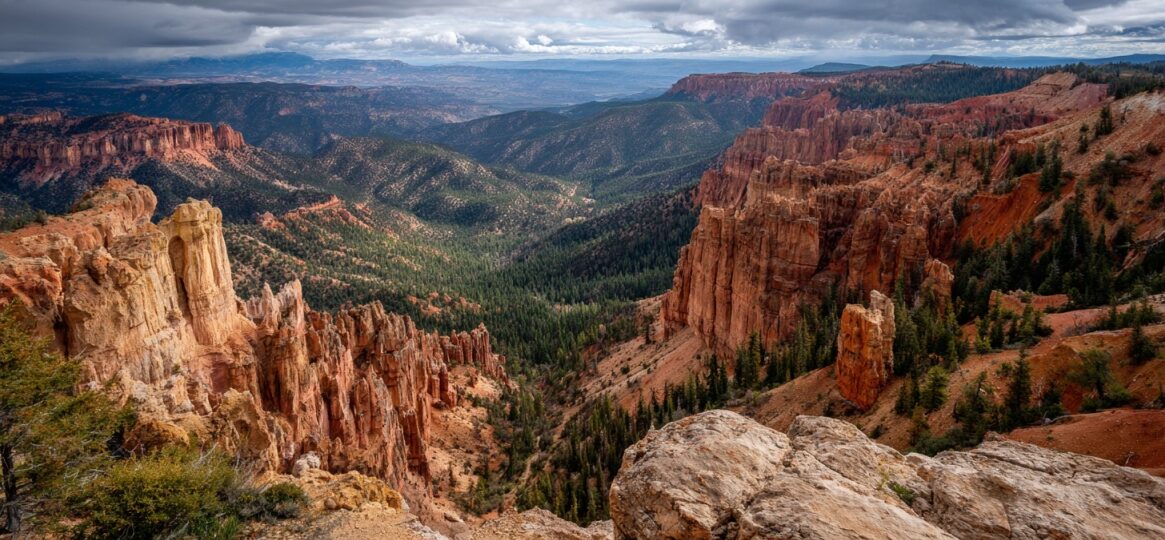

Bryce Canyon National Park sits in southern Utah and draws visitors with towering hoodoos, tall spire-shaped rock formations created through frost weathering.
Elevation ranges between about 8,000 and 9,100 feet, which makes conditions much cooler than nearby destinations like Zion National Park. Crisp air, dramatic elevation changes, and open viewpoints define the overall experience.
Timing plays a major role in planning a visit. Weather shifts quickly due to elevation, and seasonal changes affect trail access, road conditions, and available activities. Snowfall, summer storms, and spring thaw all shape what visitors can do on any given day.
The best overall months for visiting Bryce Canyon are May and June, along with September and October. But let us touch upon all months and what you can expect from visiting the Bryce Canyon during each of them.
Bryce Canyon Month-by-Month Guide
| Month | Avg High / Low (°F) | Conditions | Crowds |
|---|---|---|---|
| January | 36 / 10-16 | Heavy snow, icy trails | Very low |
| February | 38 / 17 | Snow continues, icy | Very low |
| March | 45 / 21-22 | Snow + mud mix | Low |
| April | 52-60 / 26-32 | Mixed snow and dry trails | Moderate |
| May | 62-70 / 33-40 | Mostly dry, mild | Moderate |
| June | 74-80 / 41-51 | Dry, stable | Increasing |
| July | ~80 / 48-58 | Warm, afternoon storms | Very high |
| August | ~77 / ~47 | Warm, frequent storms | High |
| September | 69-71 / 39-50 | Dry, stable | Moderate |
| October | 57-60 / 29-37 | Cool, fall colors | Low-moderate |
| November | 44-46 / 20-26 | Cold, early snow | Low |
| December | 35-40 / 14-18 | Snow, cold | Very low |
Seasonal shifts at Bryce Canyon follow a clear pattern shaped by elevation, snowfall, and summer storm cycles. Conditions can change quickly, especially during transition months, so expectations should stay flexible.
January
Deep winter conditions define January, with consistent snow cover across most elevations.
- Average temperatures: ~36°F high / ~15-16°F low
- Snowfall can exceed 15-20 inches in a single month
- Daylight averages about 10 hours, with shorter usable hiking time
Snow blankets hoodoos, creating strong contrast with red rock. Trails often require traction devices due to ice. Rim viewpoints typically stay accessible, though some sections close after storms. Road access is generally maintained, but temporary closures happen during heavy snowfall.
Winter recreation becomes the focus. Snowshoeing and cross-country skiing routes are well established. Visitor numbers remain extremely low, making January one of the quietest periods of the year.
February
Winter continues, though slightly longer days improve overall visibility and activity windows.
- Average temperatures: ~38°F high / ~17°F low
- Snow remains the dominant surface condition
- February often ranks among the cloudiest months
Snow depth remains significant, and icy trails persist across most hiking routes. Conditions for winter sports remain excellent. Photographers often favor this period due to the dramatic contrast between white snow and red formations.
Crowds stay minimal, similar to January, with limited services still in effect.
View this post on Instagram
March
Early signs of seasonal transition appear, though winter conditions still dominate many areas.
- Average temperatures: ~45°F high / ~21-22°F low
- Mixed precipitation becomes more common, including snow and rain
- Snowfall can still reach significant totals during the month
Melting snow creates muddy and slippery trails, especially at lower elevations. Some park sections begin reopening, though closures remain possible due to unstable conditions. Trail hazards increase during freeze-thaw cycles.
Visitor numbers remain relatively low, making March appealing for those prepared for variable conditions.
April
Spring conditions begin to take shape, though winter still lingers in shaded and higher areas.
- Average temperatures: ~52-53°F high / ~26-32°F low
- Rain becomes more common than snow
- Daylight increases to about 13 hours
Trail conditions improve gradually, with a mix of dry paths and lingering snow patches. Park services reopen more consistently, and accessibility improves compared to earlier months.
Higher elevation delays full spring conditions, so variability remains part of the experience. Crowd levels stay moderate, offering a balance between access and quieter conditions.
May
Late spring brings one of the most favorable periods of the year.
- Average temperatures: ~62-63°F high / ~33-40°F low
- Precipitation remains relatively low, around 1.2 inches
- Clearer skies become more frequent
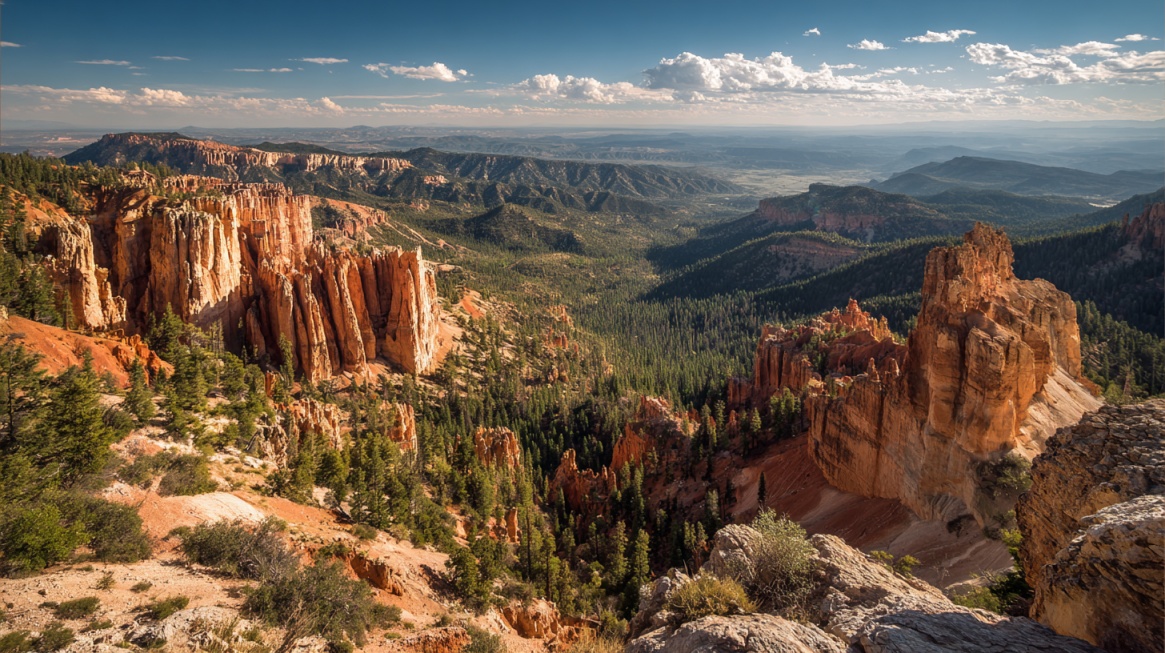
Most snow has melted, and trails become widely accessible. Wildflowers begin appearing, adding color across open areas. Stable weather supports longer hikes and full-day exploration.
Crowds begin increasing but remain below peak summer levels. Conditions during May provide a strong mix of accessibility, comfort, and manageable visitation.
June
Early summer delivers some of the most reliable conditions for outdoor activity.
- Average temperatures: ~74-76°F high / ~41-51°F low
- Lowest precipitation levels of the year, often under 1 inch
- Long daylight hours reach over 14 hours
Dry trails and stable weather create ideal hiking conditions. All park facilities operate at full capacity, including campgrounds and ranger-led programs.
Visitor numbers increase steadily. Early June offers a better balance, while later weeks begin to feel busier.
July
Peak summer arrives with warm temperatures and increased visitor traffic.
- Average temperatures: ~79-80°F high / ~48-58°F low
- Afternoon thunderstorms become common
- Rainfall increases compared to June, tied to monsoon patterns
Storms typically develop in the afternoon and can bring lightning, heavy rain, and sudden temperature drops. Mornings provide the safest and most stable conditions for hiking.
Crowds reach their highest levels of the year. Popular trails and viewpoints fill quickly, especially during midday hours.
August
Late summer maintains similar patterns, with slightly more flexibility toward the end of the month.
- Average temperatures: ~77°F high / ~47°F low
- Highest number of rainy days occurs in August
- Rainfall peaks around 1.8 inches
Frequent afternoon storms continue, often producing dramatic skies and brief downpours. Increased moisture adds patches of green vegetation across the park.
Crowds remain high, though a slight decline may occur late in the month. Planning around weather windows becomes important.
September
Transition into fall brings some of the most stable and comfortable conditions of the year.
- Average temperatures: ~69-71°F high / ~39-50°F low
- Skies remain clear or partly cloudy most of the time
- Rainfall decreases compared to summer
Dry weather returns, and afternoon storms become rare. Trail conditions are excellent, supporting longer hikes and scenic drives without weather interruptions.
Crowds drop noticeably after Labor Day. September ranks among the best months for overall experience.
View this post on Instagram
October
Cooler temperatures and fall colors define October.
- Average temperatures: ~57-58°F high / ~29-37°F low
- Daylight begins to shorten, averaging about 11 hours
Aspen trees at higher elevations turn yellow and gold, adding seasonal color. Crisp air improves visibility, especially during sunrise.
Visitor numbers continue to decline. Early October maintains strong access to services, while later weeks may see limited operations.
November
Late fall shifts quickly toward winter conditions.
- Average temperatures: ~44-46°F high / ~20-26°F low
- Mixed precipitation becomes more frequent
- Snow begins accumulating again
Trail conditions vary widely, with dry sections mixed with snow or ice. Services reduce hours, and some facilities close for the season.
Visitor numbers drop significantly, creating a quiet environment. Travel costs often decrease, making November appealing for budget-conscious visitors.
December
Winter returns fully, bringing snow and cold temperatures.
- Average temperatures: ~35-36°F high / ~14-18°F low
- Snowfall averages over a foot during the month
- Short daylight hours average around 9-10 hours
Snow-covered hoodoos create one of the most visually striking periods of the year. Main viewpoints remain open, though some roads and trails may close temporarily after storms.
Limited services remain available, but access to key areas continues. Quiet conditions and winter scenery make December a strong option for photography and solitude.
How Seasons Affect Your Visit
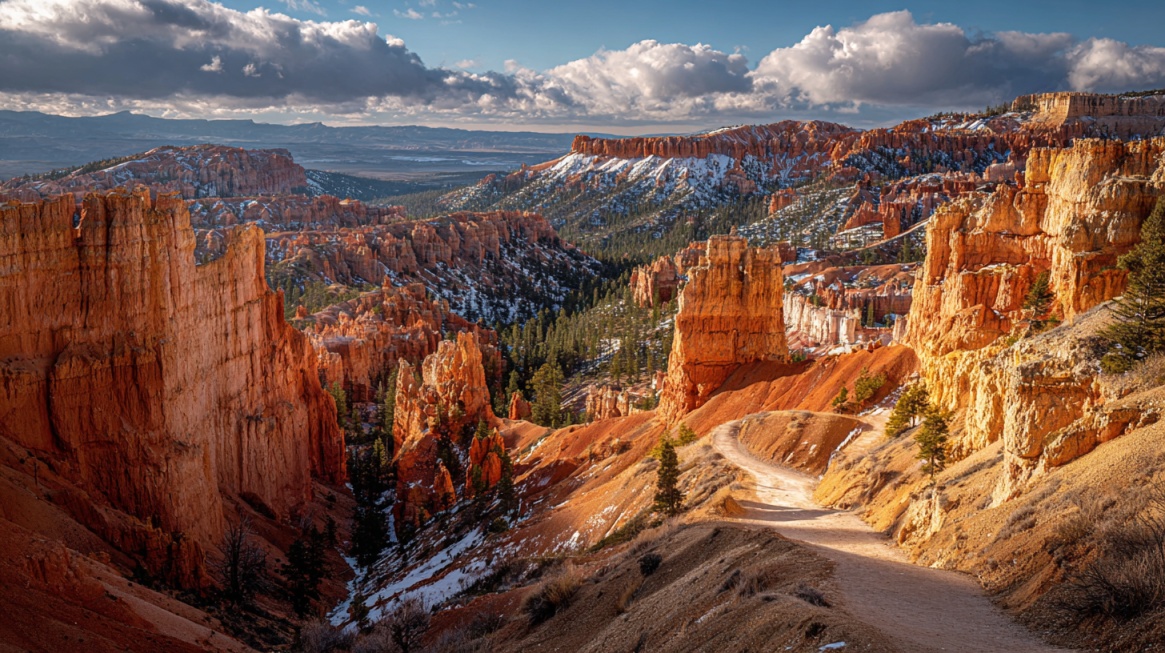
Elevation shapes nearly every aspect of a visit to Bryce Canyon. Sitting between roughly 8,000 and 9,100 feet, conditions stay noticeably cooler than nearby parks at lower elevations. Differences of 10 to 20 degrees compared to Zion are common, especially during the summer months.
Large temperature swings occur within a single day. Warm afternoons in summer often reach 70 to 80°F, yet nights can fall into the 30s or 40s due to clear skies and thin air.
Winter creates even sharper contrasts, with daytime temperatures hovering near freezing and nighttime lows dropping well below.
Snowfall plays a major role in seasonal conditions. Around 95 inches of snowfall each year, often beginning in late fall and continuing into early spring.
Snow accumulation can persist for months, especially in shaded areas and higher elevations. Icy conditions develop quickly after freeze-thaw cycles, making traction gear necessary on many trails.
Altitude also affects physical activity. Thinner air contains less oxygen, which can make hiking feel more strenuous. Even short trails may require more effort, particularly for visitors arriving directly from lower elevations. Hydration and slower pacing help reduce fatigue and improve comfort.
Seasonal Weather Patterns
Winter transforms the park into a snow-covered setting, with white layers resting on red rock formations.
Visibility often improves after storms, creating sharp contrast and clear air. Trail access becomes limited due to ice and deep snow, and some routes close for safety reasons. Quiet conditions dominate, with fewer visitors and minimal congestion.
Spring introduces rapid changes. Snow begins melting, creating muddy trails and flowing runoff across paths.
Some days feel mild and dry, while others return to winter conditions with fresh snowfall. Variability remains high, especially at higher elevations where snow lingers longer than expected.
Summer delivers warm but generally comfortable temperatures compared to desert parks. High elevation prevents extreme heat, though sun exposure remains strong due to a thinner atmosphere.
Afternoon monsoon storms develop frequently in July and August. Lightning, brief heavy rain, and sudden temperature drops can occur with little warning. Morning hours offer the most stable conditions for outdoor activity.
Fall brings a return to steady weather patterns. Cooler temperatures and lower humidity create crisp air and improved visibility. Storm activity decreases, and trails remain dry and accessible. Aspen trees at higher elevations change color, adding seasonal variation.
Visitor numbers begin to decline after early September, improving overall access.
@thewildiswaiting Bryce Canyon is Utah’s coldest national park. With an elevation of over 9,000 feet, it gets a lot of snow each winter. If you can handle the cold, the snow can make for dramatic views and hiking. They do a good job of plowing the roads after snow storms, so the main canyon area remains accessible throughout winter. If you are planning to hike in the snow, micro spikes are a must-have to maintain traction. And since today is Thanksgiving here in the US, I would like to say thank you all for supporting my account. It really means the world to me to see so many people enjoy my videos. Thank you! Total photos in this clip: 626 Total time to shoot: 38 minutes #brycecanyon #utah #hiking #outdoors ♬ Enduring Hope – Daniel Deuschle
Key Planning Factors
Seasonal changes influence logistics as much as weather conditions.
A shuttle system operates during peak visitation periods, typically between spring and fall, helping manage traffic and reduce congestion at major viewpoints.
Trail access varies throughout the year. Routes such as Wall Street often close during winter due to ice buildup along steep switchbacks.
Other trails may remain open but require traction devices or careful navigation.
Lodging demand peaks during the summer months. Hotels and campgrounds fill quickly, especially between June and August. Early reservations increase the chances of securing preferred accommodations.
Dark sky designation makes Bryce Canyon one of the best locations for stargazing. Clear air, minimal light pollution, and high elevation support excellent night sky visibility throughout the year. Winter often provides the clearest conditions, while summer offers longer evenings for observation.
Summary
Bryce Canyon offers a different experience in every season. High elevation keeps temperatures cooler than many nearby parks, even during summer.
Choice of timing depends on priorities. Comfortable weather favors late spring and fall. Solitude comes easiest in winter. Full access to trails and services aligns with summer travel.