

Zion National Park draws visitors year-round with towering sandstone cliffs, narrow slot canyons such as the Narrows, and dramatic elevation changes that shape weather and trail access.
Planning a visit requires balancing comfort, crowd levels, open trails, and transportation rules inside the canyon.
Seasonal shifts change water flow, plant life, wildlife activity, and daily hiking conditions, making timing a key part of trip planning.
Each part of the year brings its own rhythm, ranging from colorful spring growth to quiet winter days marked by snow-dusted cliffs and open roads for private vehicles.
Seasonal Overview in Zion National Park
| Month | Avg Temp (°F) | Crowd Level |
|---|---|---|
| January | 30s–50s | Very Low |
| February | 30s–50s | Very Low |
| March | 50s–70s | Medium |
| April | 60s–80s | High (holiday rush) |
| May | 70s–90s | High |
| June | 90s–100+ | Very High |
| July | 90s–100+ | Very High |
| August | 90s–100+ | Very High |
| September | 80s–90s | Medium |
| October | 60s–80s | Low-Medium |
| November | 50s–70s | Low |
| December | 30s–50s | Very Low |
Seasonal shifts shape every visit to Zion, affecting temperatures, trail access, transportation rules, and daily pacing inside the canyon.
Spring (March-May)
Spring marks a transition period as winter loosens its grip and canyon floors warm quickly. Daytime temperatures typically range between the 50s and 80s Fahrenheit, offering comfortable conditions for most hikes, especially at lower elevations.
Rain showers appear sporadically, with higher frequency early in the season.
Plant life responds rapidly to warming conditions. Wildflowers bloom across canyon bottoms and foothills, while trees regain foliage along the Virgin River.
Wildlife activity increases as animals emerge after winter dormancy, creating favorable conditions for observation and photography.
- Rising Virgin River levels driven by snowmelt
- Temporary closures of water-based routes, such as the Narrows during high flow
- Muddy or slick trails after rain or thaw cycles
Crowd levels remain manageable for much of spring, though holiday periods bring noticeable increases. Easter and Memorial Day often result in packed shuttle lines and busy trailheads.
Shuttle service resumes in March and becomes mandatory for travel along Zion Canyon Scenic Drive, making timing and patience essential.
Early morning hiking works best during spring, especially after overnight rain or cooler nights. Fresh greenery, active wildlife, and shifting light conditions make spring one of the strongest periods for photography, particularly in canyon corridors and riparian zones.
Summer (June-August)
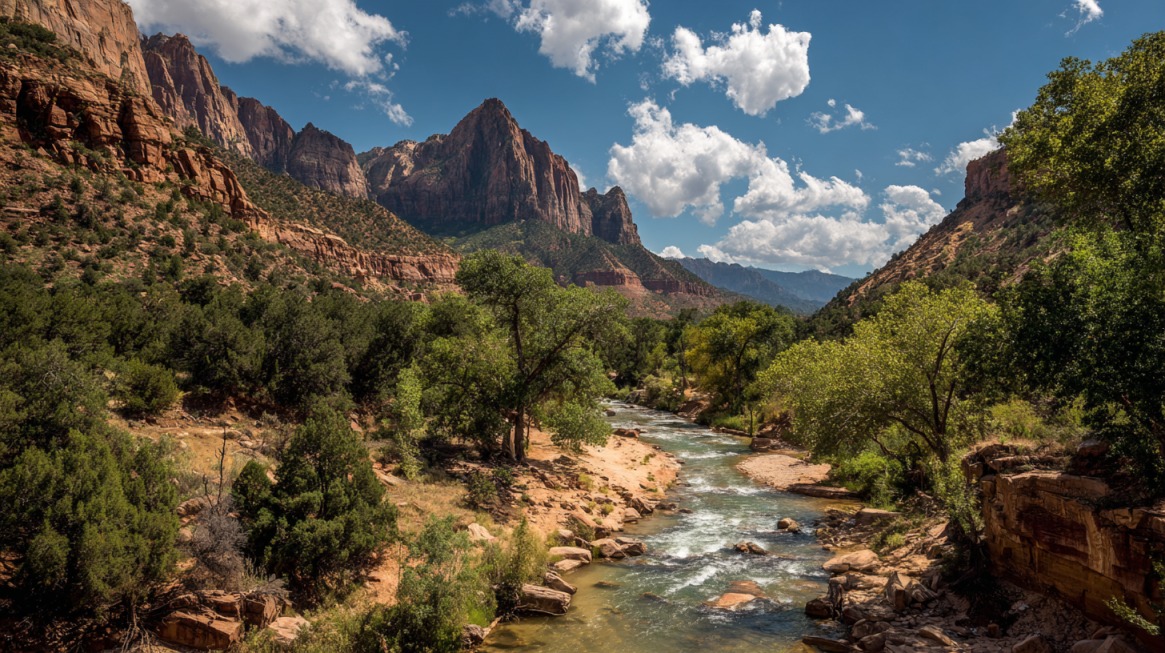
Summer brings the most demanding conditions inside Zion Canyon. Daytime temperatures frequently exceed 100 degrees Fahrenheit, especially at lower elevations with limited shade.
- Start times
- Route selection
- Daily endurance
All major trails remain open during summer, granting access to classic hikes such as Angels Landing, Emerald Pools, and longer backcountry routes. Longer daylight hours support extended itineraries, though heat limits safe hiking windows.
Monsoon season typically develops in late July and August, introducing sudden storms capable of triggering flash floods. Slot canyons require extra caution, and daily condition checks become essential before entering narrow drainages.
- Peak visitation levels across all areas of the park
- Shuttle service is operating at maximum capacity
- Trailheads fill shortly after sunrise
Hiking safety becomes a central concern during the summer months. Early starts before 8 a.m. significantly reduce heat exposure. Hydration needs increase dramatically, and exposed routes become hazardous during midday hours.
Riverside Walk and the Narrows, when conditions permit, offer relief through shade and water contact. Despite congestion and heat, summer provides full trail access and extended daylight.
Fall (September-November)
Fall brings relief after summer heat, along with stable weather patterns well-suited for long hiking days.
Daytime temperatures usually remain between the 60s and 80s Fahrenheit, creating consistent comfort across most elevations. Rain becomes less frequent, allowing trails to dry and remain reliable.
Access remains strong throughout the fall. Most routes stay open, though higher elevations may see early snowfall in November. Cottonwood trees lining the Virgin River turn golden yellow and red by late October, adding seasonal color to canyon corridors.
Visitor numbers drop sharply after Labor Day, shifting the park atmosphere toward quieter mornings and less crowded trails. Shuttle service typically continues through late October or early November, depending on annual conditions.
- Dry trails with solid footing
- Cooler air that supports longer hikes
- Reduced insect activity
Many experienced hikers favor fall due to trail safety, calmer conditions, and opportunities for photography without heavy crowds. October often represents the most balanced month across weather, access, and visitor volume.
Winter (December-February)
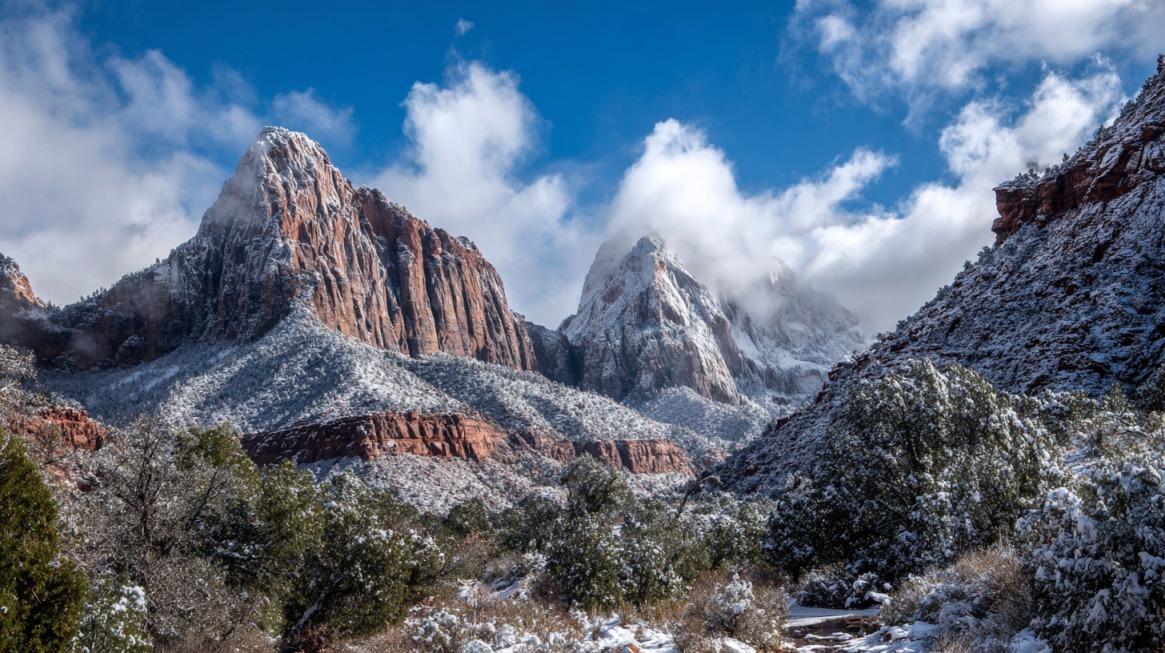
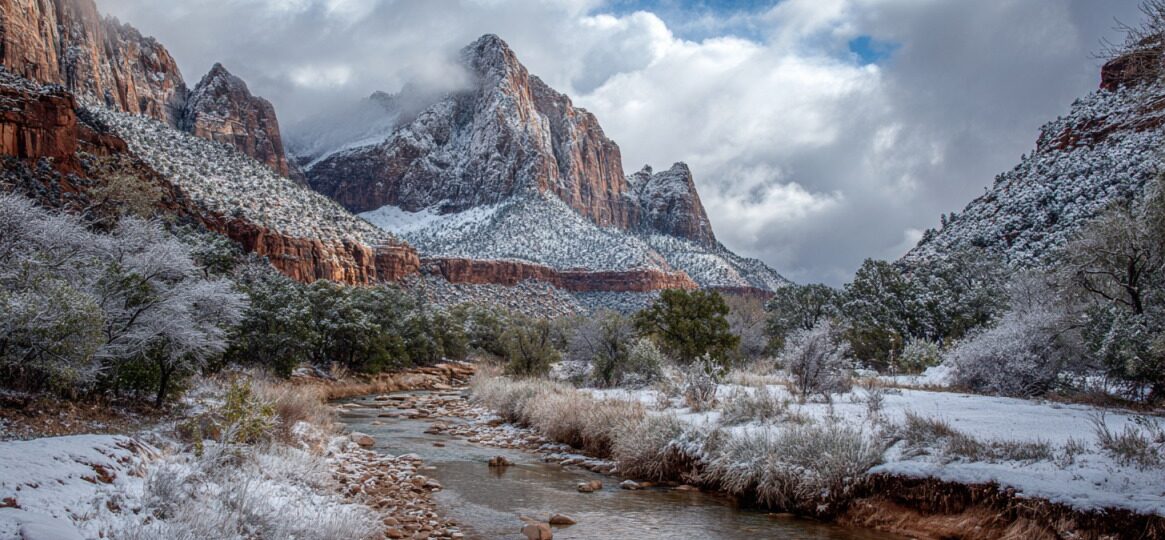
Winter introduces the calmest period of the year inside Zion. Cold temperatures dominate, with lower elevations often reaching daytime highs in the 30s to 50s Fahrenheit. Snow and ice accumulate at higher elevations, altering access and trail safety.
Several upper routes close during winter due to hazardous conditions, including Observation Point via the East Rim.
Lower canyon trails such as Riverside Walk and Watchman usually remain open, though icy patches may persist in shaded areas.
Transportation patterns shift noticeably during winter. Shuttle service stops entirely, allowing private vehicles to access Zion Canyon Scenic Drive. Traffic remains light, parking becomes easier, and spontaneous visits become more feasible.
- Snow-dusted cliffs and quiet canyon floors
- Minimal crowd pressure
- Increased need for traction devices on icy trails
Winter suits visitors seeking solitude and slower pacing. Photography benefits from stark contrasts between snow, rock, and shadow, while hikes favor shorter routes and flexible planning.
Zion Shuttle System
Transportation inside Zion Canyon changes dramatically with the seasons.
Shuttle service generally operates between mid-March and late November, with exact dates varying each year based on park policy and visitation trends.
- Reduced traffic congestion inside the canyon
- Protection of natural soundscapes
- Lower environmental impact
Private vehicles are prohibited along Zion Canyon Scenic Drive during shuttle season.
Winter months allow private vehicle access due to lower visitation levels. Shuttle schedules and wait times influence daily planning most heavily during summer and spring holiday periods.
Hiking Conditions by Season
Trail conditions fluctuate widely across the year, requiring seasonal awareness and adaptability.
Spring hiking involves changing water levels and potential closures, especially for river-based routes.
Summer hiking demands strict heat management, early starts, and constant hydration, with slot canyon safety closely tied to weather forecasts. Fall delivers dry trails and comfortable temperatures that support longer and safer hikes.
Winter hiking may require traction devices such as microspikes due to ice and snow on shaded routes and higher elevations.
View this post on Instagram
Wildlife Viewing
Animal activity follows seasonal cycles tied to temperature and food availability.
Spring offers the highest visibility as animals emerge after winter, with birdwatching and birthing season increasing sightings.
Summer wildlife activity shifts toward dawn and dusk, as many species avoid daytime heat. Fall brings increased movement of mule deer, bighorn sheep, and predators toward lower elevations.
Winter sightings decline overall, though condors, foxes, and other cold-tolerant species occasionally appear in quieter areas.
Where to Stay
Lodging choices strongly influence daily access and flexibility. Accommodations near Springdale offer advantages such as early park entry and reduced commute times.
Options include modern tiny homes, family-oriented rentals, and cozy winter retreats.
- Spring and fall require early booking due to high demand
- Winter and late fall provide better pricing and flexibility
Staying close to the park entrance allows visitors to maximize early morning access, especially during shuttle season, while winter travelers benefit from relaxed booking conditions and quieter surroundings.
Choosing the Best Time for You to Visit Zion National Park
@whatrvdoing Truly an unforgettable day. This was a bucket list item I’ll never forget. #thenarrows #zionnationalpark #hiking #utahroadtrip #utahhikes ♬ som original – WE ARE 00h.03m 🇨🇭
Spring and fall provide the strongest balance of pleasant weather, open trails, and manageable crowds, especially during April, May, September, and October.
Winter suits visitors seeking solitude and open canyon roads, while summer fits travelers focused on full trail access and long daylight hours, provided heat precautions remain a priority.
Careful timing allows Zion National Park to deliver unforgettable scenery, no doubt about that.