
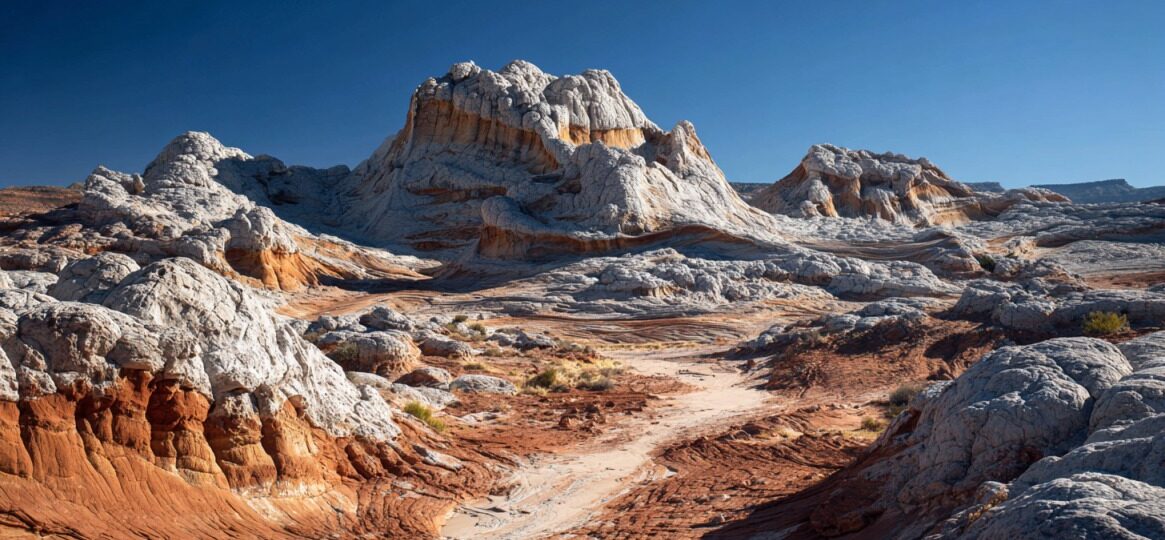

Tucked away in the heart of Vermilion Cliffs National Monument, White Pocket is one of those hidden gems that often flies under the radar, especially when it’s got a famous neighbor like The Wave stealing the spotlight.
But here’s the thing: unlike The Wave, you don’t need a permit to visit White Pocket, and it rarely gets crowded.
That means you can enjoy the same jaw-dropping swirls of sandstone, vibrant colors, and raw, untouched beauty, without the lottery stress or packed trails.
What makes it even better? It’s accessible. So, if you’re craving solitude and a bit of adventure without all the red tape, White Pocket delivers.
The journey there, the quiet, the insane rock formations, its all part of the experience.
And yeah, you’ll need to plan ahead, but that’s part of the reward too.
Where White Pocket Is Located
Have in mind that getting to White Pocket requires you to prep. The last stretch of the trip has no paved roads, so a high-clearance 4WD vehicle is a must, and checking the weather is key.
That rugged journey is part of what makes the place feel so special once you’re there.
- Kanab, Utah – Around 75 miles away, about a two-hour drive. It’s great if you want to see other nearby desert spots like Coral Pink Sand Dunes or Buckskin Gulch.
- Page, Arizona – About 91 miles out, roughly two hours and twenty minutes. It’s a solid choice if you’re looking for more places to stay, grab a bite, or rent a 4WD vehicle.
Kanab tends to be the go-to for serious adventurers trying to hit multiple landmarks, while Page is a bit more tourist-friendly, especially if you’re flying in or need gear.
Reaching White Pocket isn’t easy, and that’s exactly why it’s so rewarding. It feels like stepping into a secret slice of the Southwest, where nature speaks in silence and color.
How to Get to White Pocket
Most travelers kick things off from either Page, Arizona, or Kanab, Utah, before heading south on Highway 89A.
From there, the adventure begins as you turn onto House Rock Valley Road (BLM 1065), a long, sandy stretch that leads you through a series of backcountry roads: BLM 1017, 1087, and finally 1086, which takes you right to White Pocket.
Be ready to spend a few hours navigating dusty, often unmarked tracks.
View this post on Instagram
Driving Requirements
This isn’t your typical scenic drive. You’ll need a high-clearance, four-wheel-drive vehicle,and yes, that’s non-negotiable.
Regular all-wheel-drive vehicles usually can’t handle the deep sand and rough terrain.
- The roads can get rutted, washed out, or deceivingly tricky, especially after it rains.
- GPS apps can steer you wrong, so have a backup: offline navigation tools or, better yet, a good old-fashioned map.
- It often takes around 3 hours each way, depending on stops and road conditions.
Vehicle & Tour Options
- Jeep rentals like JeepBnB in Page offer fully equipped vehicles built for backcountry driving. They usually come with recovery gear, just in case.
- Guided tours are available from both Kanab and Page. These are a great option if you’re unsure about off-road driving or just want to kick back and learn from a local expert.
Heads-up: If you get stuck in the sand and need to be pulled out, recovery can cost up to $1,000. So, whether you rent a rugged vehicle or go with a guide, being well-prepared will save you a lot of headache—and cash.
Tips for a Safe Journey
When it comes to visiting White Pocket, preparation is essential. This spot is remote, with virtually no cell service, so once you’re out there, you’re on your own.
The difference between a smooth, unforgettable adventure and a tough, possibly dangerous situation comes down to how well you plan.
- Check the weather before you head out; heavy rain or extreme heat can turn the trip risky.
- Bring plenty of water, at least one gallon per person, more if you plan to stay longer.
- Pack enough food and snacks to last the entire day.
- Be ready for sandy roads, carry a tire repair kit, shovel, and traction boards.
- Dress in layers, temperatures can swing 30–40°F between day and night.
- Carry emergency gear, including a satellite communicator for SOS situations.
- Let someone know your route and when you plan to return.
Out here, you can’t rely on a quick call for help. Every piece of gear you bring, every detail you plan in advance, adds comfort and safety. It’s a place that truly rewards those who show up prepared.
Best Time to Visit
White Pocket is beautiful all year, but the desert climate can be intense, depending on the season. Picking the right time to go can make your trip much more enjoyable.
The sweet spot? October through April. During these months, the weather is more forgiving with cooler days, clear skies, and better overall conditions.
- Spring (March–April): Comfortable temps, sunny skies, and blooming wildflowers.
- Fall (October–November): Crisp air, gorgeous golden tones, and fewer crowds.
- Winter (December–February): Cold mornings, peaceful solitude, and striking winter light. Just be ready for freezing temps, especially at sunrise.
Summer, on the other hand, can be brutal; local temps regularly climb above 100°F, which makes hiking and exploring dangerous if you’re not fully prepared.
If you’re into photography, time your visit around sunrise or sunset. The changing light brings the sandstone to life, shifting colors and shadows by the minute.
What to Expect Upon Arrival
Getting to White Pocket feels like stumbling into a natural masterpiece, no fences, no trails, no signs, just endless freedom to explore.
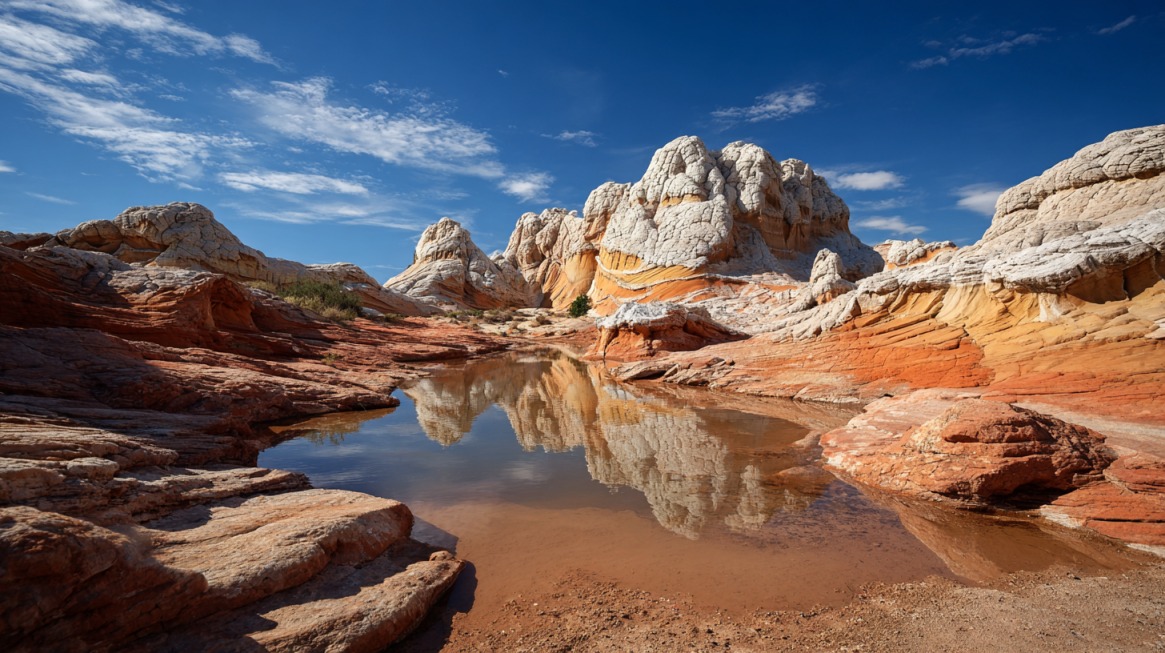
It’s like an open-air art gallery sculpted by wind, rain, and time.
- Brain Rocks: These round, bubbly formations look like the surface of a brain, one of a kind and oddly beautiful.
- The Swirl: A striking spiral of sandstone, painted in vivid oranges, pinks, and whites.
- Multicolored Domes: Rolling hills of layered rock in cream, red, gold—like a desert rainbow.
The best way to experience White Pocket? Take your time wandering. You’ll notice how every angle looks different as the light changes.
Capture sunrise or sunset. It’s when the landscape truly glows. Fly a drone for aerial shots, just check local regulations and weather conditions first. Without crowds or noise, the whole place feels like it was made for quiet discovery.
How Much Time Should You Spend?
@endlessfamilyadventure Go HERE if you can’t get the permit for The Wave 😉 📍White Pocket, Vermilion Cliffs National Monument, Arizona 4×4 with high clearance is a must to get there Don’t trust Google Maps – it will take you through some questionable roads. 🙈 The drive is about 3 hours from Kanab or Page and most of it is on a dirt road and deep sand. From Road 89 between Page and Kanab, go south towards the Wire Pass trailhead until Pine Tree Rd. (Alternatively, you can come from the south from 89A going north on House Rock Rd.) Turn left (east) on BLM road 1017 and continue for 6 miles until you get to a ranch house; go around the ranch and then turn left on BLM 1087 and continue until you get to White Pocket. There are also some newer signs that will help. If in doubt, take the road that looks like it is well-traveled! 😉 Trail: there are no designated trails, you can just wander around and discover all the different rock formations, small pools, and sand pits. The place is actually a lot bigger than I thought and we didn’t even have the time to explore it all. There is something new and cool to look at around every corner! Leave no Trace: There are no facilities in the area, so please make sure to pack out all your waste. Tag a friend who needs to see this! #whitepocket #explorearizona #offthebeatenpath #familytravel ♬ Lola – Samica
A quick stop is simply not going to be enough, because White Pocket deserves more. Plan to stay at least three to four hours so you can really soak it all in, take photos, and wander at your own pace.
If you’re into photography or just want to catch the area at its most magical, consider spending a full day or even camping overnight. That way, you get sunset, moonlight, and sunrise in one unforgettable trip.
- Dispersed camping is allowed near White Pocket.
- There are no facilities, no restrooms, no running water, so bring everything you need.
- Stick to Leave No Trace principles to help preserve the fragile desert environment.
Campers are rewarded with some of the clearest night skies in the American Southwest. The stars shine bright above the swirling domes, and the silence is otherworldly. It’s a moment of peace few places on Earth can match.
Is It Worth the Drive?
White Pocket rewards every traveler willing to put in the effort. The combination of solitude, surreal rock formations, and unfiltered desert light creates an atmosphere unlike any other.
Reaching it may challenge even seasoned adventurers, yet the reward justifies the preparation.
Those who seek silence, color, and wonder in equal measure will find White Pocket unforgettable. Guided tours add safety and insight, while self-driven journeys deliver pure adventure.
With proper planning, it becomes not only worth the drive but an experience that defines the essence of desert exploration.